
The LED outdoor‑display sector is moving toward ultra‑high‑resolution micro‑LEDs, energy‑aware driver architectures, and AI‑enabled edge systems that optimize content and power. Manufacturers prioritize modular, rugged designs for rapid field service and lifecycle value LED screen display. New transparent, flexible and curved form factors expand urban integration while zoning, light‑pollution and sensor‑privacy rules tighten. Market standards and automated assembly are accelerating scalability and TCO improvements. Continue for a deeper look at technical roadmaps, standards and deployment trade‑offs.
Ultra‑High‑Resolution and Micro‑LED Advances
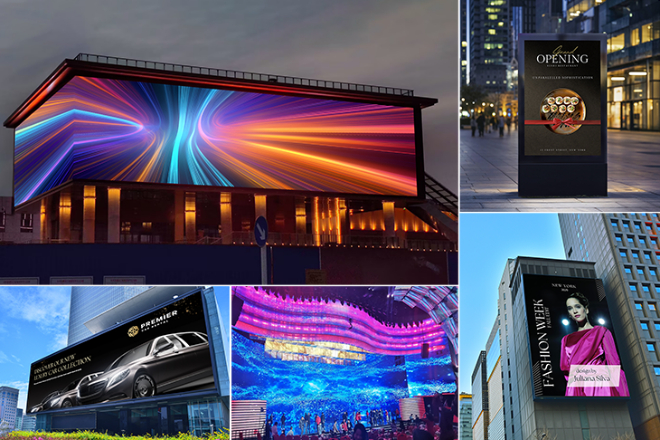
Several manufacturers are accelerating development of ultra‑high‑resolution and micro‑LED technologies to meet rising demand for sharper, more energy‑efficient outdoor displays in dense urban and high‑end commercial environments. The sector pursues micro LED tiling to create seamless, modular façades allowing rapid scaling without compromising uniformity. Technical teams prioritize pixel density scaling strategies that balance optical performance, thermal management, and manufacturability. From a market-driven standpoint, suppliers target premium signage and experiential spaces where higher resolution commands price premiums and operational flexibility. Strategic roadmaps emphasize assembly automation, supply-chain diversification, and standards for calibration and maintenance to protect investment freedom. Continued innovation in production yield and serviceability will determine which vendors lead adoption of ultra‑high‑resolution outdoor solutions.
Energy Efficiency and Adaptive Power Management
Against a backdrop of rising energy costs and stricter sustainability mandates, manufacturers and system integrators prioritize energy efficiency and adaptive power management as core differentiators for outdoor LED displays. The focus shifts to modular driver architectures, high-efficiency power supplies, and firmware enabling dynamic dimming to reduce consumption without compromising legibility. Market players quantify lifecycle TCO gains, promoting systems that scale power based on content complexity and ambient conditions. Integrating sensors with predictive scheduling optimizes run times, aligning display availability with audience patterns and tariff windows. Standards for measurement and certification emerge, guiding procurement toward verified efficiency metrics. The result is a competitive landscape where energy-smart designs liberate operational freedom for operators and deliver demonstrable environmental and economic value.
Smart Connectivity and AI‑Driven Content Optimization
Building on energy-smart hardware and adaptive power strategies, outdoor LED systems increasingly leverage networked architectures and machine learning to optimize content delivery, display performance, and operational costs. The sector adopts edge analytics and Predictive scheduling to enable autonomous, low-latency decisions that respect user control and operational freedom. Systems prioritize bandwidth-efficient codecs, secure APIs, and federated models to minimize cloud dependency while scaling campaigns.
- Real-time edge analytics for localized relevance and faster failover.
- Predictive scheduling to align content with audience patterns and grid conditions.
- Federated learning and secure connectivity to preserve autonomy and reduce latency.
This strategic, technical approach drives market differentiation, lowering total cost of ownership and enabling operators to deploy highly adaptive, user-empowering signage networks.
Durability, Modular Design, and Maintenance Innovations
In response to harsher environmental demands and tighter uptime expectations, outdoor LED manufacturers are prioritizing ruggedized components, modular architectures, and predictive maintenance pathways that together reduce lifecycle costs and accelerate serviceability. The sector emphasizes weatherproof coatings, sealed connectors, and corrosion-resistant alloys to extend operational windows and lower failure rates in exposed locations. Modular design enables rapid field swaps of tiles and power modules, reducing mean time to repair and facilitating upgrades without full panel replacement. Predictive analytics and remote diagnostics shift maintenance from reactive to scheduled, preserving autonomy for operators who value operational freedom. Tool free maintenance mechanisms and standardized module interfaces cut labor and access barriers, while service contracts and spares logistics optimize total cost of ownership for large deployments.
New Form Factors: Transparent, Flexible, and Curved Displays
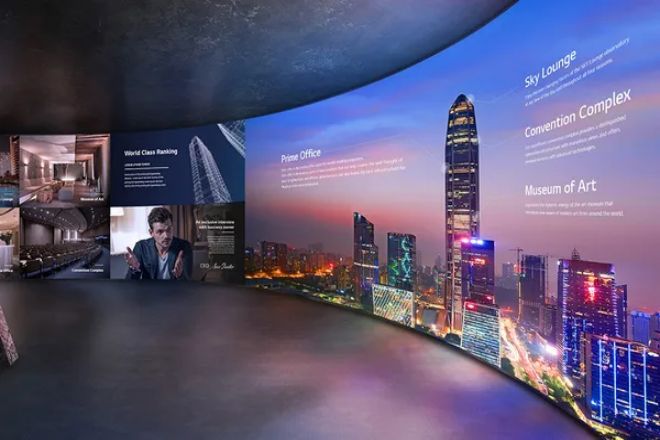
With demand for immersive, space-efficient signage rising, manufacturers are investing in transparent, flexible, and curved LED form factors to open up new installation contexts and monetizable ad inventory. The market emphasizes transparent facades for shopfronts and atria, flexible banners for temporary campaigns, and curved modules for architectural integration. Technical progress reduces pixel pitch, power draw, and mounting complexity while preserving transmission and structural resilience. Strategic adopters gain differentiated placements and dynamic revenue streams without expanding physical footprint. Considerations focus on lifecycle cost, supply-chain readiness, and content workflows suited to non-planar canvases.
- Transparent facades enable layered messaging and daylight continuity.
- Flexible banners allow rapid deployment and creative freedom.
- Curved displays integrate with building geometry for premium inventory.
Regulatory, Privacy, and Urban Integration Considerations
Regulatory frameworks must address light pollution limits to balance display visibility with nighttime environmental and health standards. Concurrently, robust data privacy protections are required for sensor-equipped and targeted-content systems to maintain consumer trust and comply with emerging legislation. Urban integration strategies should prioritize cityscape design harmony to align commercial objectives with municipal aesthetics and pedestrian experience.
Light Pollution Limits
Light-pollution compliance frameworks are becoming a central design constraint for outdoor LED deployments as municipalities tighten luminous intensity, color temperature, and curfew requirements to protect nocturnal environments and residential privacy. Manufacturers and planners prioritize glare mitigation and skyglow reduction through adaptive dimming, spectral tuning, and directional optics to meet varied municipal codes while preserving visual impact and advertiser reach. Strategic stakeholders evaluate trade-offs between visibility and regulatory risk, enabling flexible contracts and retrofit pathways.
- Deploy adaptive control systems that enforce curfews and lumen caps.
- Specify optics and shielding to preserve sightlines and minimize spill light.
- Leverage spectral choices to balance brand fidelity with blue-light limits.
This approach sustains market freedom while ensuring urban compatibility.
Data Privacy Protections
Beyond managing luminous emissions, stakeholders must also address the data privacy implications of increasingly sensorized and networked outdoor LED displays. Industry leaders should adopt rigorous user consent frameworks that are transparent, granular, and revocable, enabling individuals to control proximity-based analytics without compromising freedom of movement. Technical architectures must prioritize edge processing and robust data anonymization to reduce identifiable data flows to central servers while preserving valuable audience metrics. Regulators and vendors will benefit from interoperable standards for auditability, breach response, and minimal retention policies that balance commercial insights with civil liberties. Market competitiveness will hinge on demonstrable privacy guarantees; operators that embed privacy-by-design and verifiable consent mechanisms can capture trust-sensitive segments and meet tightening compliance regimes.
Cityscape Design Harmony
Against the backdrop of evolving urban priorities, Cityscape Design Harmony requires coordinated policy, technical standards, and stakeholder workflows that integrate outdoor LED installations into the fabric of cities without undermining public amenity, safety, or civic aesthetics. The discussion emphasizes harmonizing regulatory compliance, privacy safeguards, and urban integration to preserve pedestrian flow and architectural symmetry while unleashing commercial opportunity. Strategic planning aligns municipal codes, sensor use limitations, and dynamic brightness controls to protect sightlines and movement. Market actors must adopt interoperable standards and modular designs that respect heritage districts and transit corridors.
- Define zoning envelopes and sightline algorithms
- Standardize sensor data minimization and retention
- Coordinate installers with urban planners for flow and symmetry
Frequently Asked Questions
How Will LED Outdoor Displays Impact Local Wildlife and Ecosystems?
LED outdoor displays increase light pollution and can cause habitat disruption, altering animal behavior and migration. Stakeholders should adopt targeted dimming, spectral management, and zoning policies to minimize ecological impact while preserving market flexibility and operational freedom.
What Are the Long-Term Recycling Solutions for Obsolete LED Panels?
Long-term solutions include modular refurbishment programs and closed loop recycling systems that reclaim components and rare metals, enabling manufacturers to resell refurbished modules, reduce supply dependence, cut costs, and empower buyers with repairable, freedom-focused choices.
Can Small Businesses Afford Customized Outdoor LED Installations?
Yes; the respondent notes small businesses can afford customized outdoor LED installations by targeting budget tiers, leveraging modular designs to scale features, optimizing total cost of ownership, and selecting market-driven suppliers that enable flexible, freedom-oriented deployment strategies.
How Will Vandalism and Public Misuse Be Deterred Effectively?
They will deter vandalism through tamper resistant mounting, hardened enclosures, remote monitoring and rapid maintenance protocols; manufacturers combine technical safeguards with community stewardship programs, incentivizing local ownership while preserving user autonomy and market scalability.
What Skills Will Technicians Need for Future LED Technologies?
Technicians will need advanced electronics knowledge, network troubleshooting expertise, software integration skills, cybersecurity awareness, data analytics capability, project management acumen, and client-facing adaptability to deliver flexible, market-driven LED solutions that preserve operator autonomy and scalability.
Conclusion
To summarize, the LED outdoor display sector is poised for rapid, market-driven transformation as ultra‑high‑resolution and Micro‑LED technologies converge with advanced energy management, AI‑enabled content orchestration, and resilient modular architectures. Manufacturers and city planners that prioritize scalable, low‑power, secure connectivity and adaptive maintenance will capture commercial and regulatory advantages. Emerging transparent, flexible and curved form factors expand application footprints, demanding coordinated standards and urban integration strategies to release sustained ROI and public value.